Record display
 PROTA4U Homepage
| Select translation pop-up: |
|
|
PROTA4U Record display |
PROTA4U Homepage
|
| Fl. Congo Belge 3: 461 (1952). | |||
| show more data (2) | comments (0) |
| Caesalpiniaceae (Leguminosae - Caesalpinioideae) | |||
| show more data (8) | comments (0) |
| Brachystegia zenkeri Harms (1910). | |||
| show more data (3) | comments (0) |
| show more data (2) | comments (0) |
| Brachystegia laurentii occurs from western Cameroon south to Gabon and east to DR Congo. | |||
| show more data (10) | comments (0) |
| The wood, known as ‘bomanga’ or ‘léké’, is locally used, mainly for construction and furniture. It is suitable for joinery, interior trim, panelling, ship building, vehicle bodies, toys, novelties, boxes, crates, vats, carvings, turnery, veneer and plywood. It is also used for charcoal production. In DR Congo beaten stripped bark is used to make clothes, baskets, ropes, grain sacks and game nets. The bark is also used as a soap substitute. Among the Ngandu people in central DR Congo, powdered bark is blown into the nose to treat serious cough, especially in children. Bark decoctions are used to treat gonorrhoea. Soaked bark is rubbed onto scarifications around the snout of hunting dogs to increase their aggressiveness. | |||
| show more data (2) | comments (0) |
| The wood of Brachystegia laurentii is mainly used and traded locally, but it may occasionally be included in mixed consignments of timber for export. | |||
| show more data (0) | comments (0) |
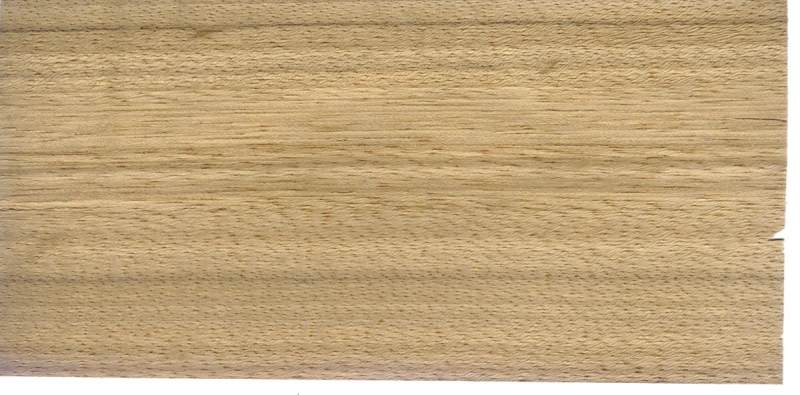
| The heartwood is pale brown to yellowish brown, occasionally with coppery streaks, and indistinctly demarcated from up to 20 cm thick, whitish or yellowish sapwood. The grain is straight or interlocked, texture medium. The wood is medium-weight, with a density of 520–610 kg/m³ at 12% moisture content. It should be air dried with care as it has a tendency to twist and check. The rates of shrinkage are moderate, from green to oven dry 3.0–4.4% radial and 5.0–7.0% tangential. Once dry, the wood is moderately stable to stable in service. At 12% moisture content, the modulus of rupture is (89–)111–143 N/mm², modulus of elasticity 9020–13,530 N/mm², compression parallel to grain 41–54 N/mm², shear 5.5–7.5 N/mm², cleavage 10.5–21.5 N/mm and Chalais-Meudon side hardness 2.1–3.3. The wood is fairly easy to saw and work with both hand and machine tools. It polishes well to a good finish. The wood holds nails and screws well. It has good gluing and peeling characteristics. The bending properties are moderate. The wood has a low durability, being liable to termite and marine borer attacks. The heartwood is resistant to preservative treatment, but the sapwood is permeable to moderately resistant. The wood contains 40–43% cellulose, 26.5–33.5% lignin, 15.5–16.5% pentosan, 0.5–1.2% ash and little silica. The solubility is 3.3–10.5% in alcohol-benzene, 0.8–5.1% in hot water and 15.5–17.6% in a 1% NaOH solution. | |||
| show more data (0) | comments (0) |
| Deciduous or nearly evergreen, medium-sized to large tree up to 45 m tall; bole branchless for up to 25 m, straight and cylindrical, up to 150(–200) cm in diameter, without buttresses, sometimes slightly thickened and fluted at base; bark smooth, becoming rough and flaking off in irregular patches, silvery yellowish grey to dark grey, inner bark thick, hard, fibrous, orange-red, turning brown upon exposure; crown umbrella-shaped, dense, with ascending branches; twigs drooping, glabrous to slightly hairy, with numerous lenticels. Leaves alternate, paripinnately compound with 3–7 pairs of leaflets; stipules deltoid, early caducous; petiole 0.5–1 cm long, thickened at base, rachis (3–)8–15 cm long, angular, grooved; leaflets opposite, nearly sessile, obliquely oblong-lanceolate to obovate, 3–10(–15) cm × 1–5 cm, but basal pair of leaflets very small and often early caducous, cuneate to more or less rounded at base, obtuse to slightly notched or short-acuminate at apex, papery to slightly leathery, glabrous, pinnately veined with up to 14 pairs of lateral veins. Inflorescence a terminal or axillary rounded panicle, strongly branched; peduncle thick, up to 2 cm long, densely hairy, many-flowered. Flowers bisexual, nearly regular, small, fragrant, at base with 2 ovate bracteoles c. 9 mm long; pedicel 1–2.5 mm long; sepals (3–)5, elliptical to ovate, 2–3(–4) mm long, nearly glabrous; petals 2–5, thread-like, 1–4 mm long; stamens 10, free, c. 1.5 cm long; ovary superior, ellipsoid, c. 4 mm long, with c. 4 mm long stipe, nearly glabrous, style slender, coiled. Fruit an oblong to oblanceolate or obovate, flattened pod 15–25(–30) cm × 5–10 cm, at a right angle to the stipe, smooth but slightly wrinkled, reddish brown to nearly black when ripe, dehiscent with 2 woody valves, 2–3-seeded. Seeds disk-shaped, c. 3.5 cm in diameter, dark brown. | |||
| show more data (1) | comments (0) |
| Brachystegia is a taxonomically difficult genus comprising about 30 species, distributed in mainland tropical Africa and South Africa, the majority of species occurring in southern tropical Africa, where they are characteristic of miombo woodland. | |||
| show more data (0) | comments (0) |
| Wood-anatomical description (IAWA hardwood codes): Growth rings: 1: growth ring boundaries distinct. Vessels: 5: wood diffuse-porous; 13: simple perforation plates; 22: intervessel pits alternate; 23: shape of alternate pits polygonal; 26: intervessel pits medium (7–10 μm); 27: intervessel pits large (≥ 10 μm); 29: vestured pits; 30: vessel-ray pits with distinct borders; similar to intervessel pits in size and shape throughout the ray cell; 42: mean tangential diameter of vessel lumina 100–200 μm; 43: mean tangential diameter of vessel lumina ≥ 200 μm; 46: ≤ 5 vessels per square millimetre; (47: 5–20 vessels per square millimetre); 58: gums and other deposits in heartwood vessels. Tracheids and fibres: 61: fibres with simple to minutely bordered pits; 66: non-septate fibres present; 69: fibres thin- to thick-walled. Axial parenchyma: 80: axial parenchyma aliform; 81: axial parenchyma lozenge-aliform; 83: axial parenchyma confluent; 89: axial parenchyma in marginal or in seemingly marginal bands; 91: two cells per parenchyma strand; 92: four (3–4) cells per parenchyma strand; (93: eight (5–8) cells per parenchyma strand). Rays: 96: rays exclusively uniseriate; (97: ray width 1–3 cells); 104: all ray cells procumbent; (106: body ray cells procumbent with one row of upright and/or square marginal cells); 116: ≥ 12 rays per mm. Storied structure: (120: axial parenchyma and/or vessel elements storied); (121: fibres storied); 122: rays and/or axial elements irregularly storied. Secretory elements and cambial variants: (131: intercellular canals of traumatic origin). Mineral inclusions: 136: prismatic crystals present; 142: prismatic crystals in chambered axial parenchyma cells. (E.E. Mwakalukwa, P. Baas & H. Beeckman) | |||
| show more data (0) | comments (0) |
| Brachystegia laurentii usually sheds its leaves for a short period. Young leaves are bright red. When new leaves have appeared, the crown is characteristically brownish red from shining old leaves still present and falling. In DR Congo trees have been reported to flower in February–March. Fruits ripen about 4 months later. They open explosively, throwing out the seeds. | |||
| show more data (0) | comments (0) |
| Brachystegia laurentii is commonly found in dense evergreen rainforest and semi-deciduous forest, where it often occurs along rivers. Where it occurs in the forest, it often grows gregariously, sometimes dominant. It is a shade bearer, represented in all size classes and often forming a large proportion of the highest storey. In DR Congo it is commonly found in association with Gilbertiodendron dewevrei (De Wild.) J.Léonard, Pycnanthus angolensis (Welw.) Warb. and Fagara macrophylla (Oliv.) Engl. | |||
| show more data (2) | comments (0) |
| Seedlings and saplings of Brachystegia laurentii are usually abundant near the mother tree. | |||
| show more data (0) | comments (0) |
| In Cameroon Brachystegia laurentii is locally common and gregarious. In forest in south-western Cameroon, the average density of trees with a bole diameter of more than 60 cm is 0.3 tree/ha, with an average wood volume of 3.2 m³/ha. In Gabon Brachystegia laurentii is less common, but locally it is dominant with up to 20 trees per ha with a bole diameter of more than 35 cm. The average wood volume in Gabon is 0.7 m³/ha. In DR Congo Brachystegia laurentii usually grows either individually or in small clusters occupying not more than a few hectares, but also there it is locally dominant. It is one of the dominant species in the climax forest in the Yangambi Biosphere Reserve. | |||
| show more data (0) | comments (0) |
| The minimum diameter limit of the bole allowed for felling is 70 cm in Gabon and 60 cm in Cameroon. | |||
| show more data (0) | comments (0) |
| Brachystegia zenkeri is included as vulnerable in the IUCN Red list of threatened species as a result of habitat loss and scattered occurrence in Cameroon, but this name is considered a synonym of Brachystegia laurentii. It seems unlikely that Brachystegia laurentii suffers from genetic erosion because it is locally common and fairly widespread. However, populations in Cameroon and Gabon seem to have a limited and local scope and may easily become threatened because of habitat destruction and selective felling. | |||
| show more data (0) | comments (0) |
| Brachystegia laurentii will continue to remain locally useful as a source of timber and fibre. With its straight and cylindrical bole reaching large dimensions, it is of interest for further commercialization, but its scattered occurrence limits the possibilities for commercial exploitation. Further research is needed on appropriate management systems in the natural forest to ensure sustainable exploitation. | |||
| show more data (0) | comments (0) |
| • ATIBT (Association Technique Internationale des Bois Tropicaux), 1986. Tropical timber atlas: Part 1 – Africa. ATIBT, Paris, France. 208 pp. • Aubréville, A., 1970. Légumineuses - Césalpinioidées (Leguminosae - Caesalpinioideae). Flore du Cameroun. Volume 9. Muséum National d’Histoire Naturelle, Paris, France. 339 pp. • Bolza, E. & Keating, W.G., 1972. African timbers: the properties, uses and characteristics of 700 species. Division of Building Research, CSIRO, Melbourne, Australia. 710 pp. • CIRAD Forestry Department, 2009. Bomanga. [Internet] Tropix 6.0. http://tropix.cirad.fr/ africa/ bomanga.pdf’. Accessed March 2010. • de Saint-Aubin, G., 1963. La forêt du Gabon. Publication No 21 du Centre Technique Forestier Tropical, Nogent-sur-Marne, France. 208 pp. • Letouzey, R. & Mouranche, R., 1952. Ekop du Cameroun. Centre Technique Forestier Tropical, Nogent-sur-Marne, France. 81 pp. + 20 plates. • Tailfer, Y., 1989. La forêt dense d’Afrique centrale. Identification pratique des principaux arbres. Tome 2. CTA, Wageningen, Pays-Bas. pp. 465–1271. • Takahashi, A., 1978. Compilation of data on the mechanical properties of foreign woods (part 3) Africa. Shimane University, Matsue, Japan. 248 pp. • Vivien, J. & Faure, J.J., 1985. Arbres des forêts denses d’Afrique Centrale. Agence de Coopération Culturelle et Technique, Paris, France. 565 pp. • Wilczek, R., Léonard, J., Hauman, L., Hoyle, A.C., Steyaert, R., Gilbert, G. & Boutique, R., 1952. Caesalpiniaceae. In: Robyns, W., Staner, P., Demaret, F., Germain, R., Gilbert, G., Hauman, L., Homès, M., Jurion, F., Lebrun, J., Vanden Abeele, M. & Boutique, R. (Editors). Flore du Congo belge et du Ruanda-Urundi. Spermatophytes. Volume 3. Institut National pour l’Étude Agronomique du Congo belge, Brussels, Belgium. pp. 234–554. | |||
| show more data (1) | comments (0) |
| • Aubréville, A., 1968. Légumineuses - Caesalpinioidées (Leguminosae - Caesalpinioideae). Flore du Gabon. Volume 15. Muséum National d’Histoire Naturelle, Paris, France. 362 pp. • Burkill, H.M., 1995. The useful plants of West Tropical Africa. 2nd Edition. Volume 3, Families J–L. Royal Botanic Gardens, Kew, Richmond, United Kingdom. 857 pp. • Christy, P., Jaffré, R., Ntougou, O. & Wilks, C., 2003. La forêt et la filière bois au Gabon. Projet Aménagement Forestier et Environnement, Libreville, Gabon. 389 pp. • Davy, B.J. & Hutchinson, J., 1923. A revision of Brachystegia. Bulletin of Miscellaneous Information Kew 1923(4): 129–163. • Fouarge, J., Quoilin, J. & Roosen, P., 1970. Essais physiques, mécaniques et de durabilité de bois de la République Démocratique du Congo. Série technique No 76. Institut National pour l’Etude Agronomique du Congo (INEAC), Brussels, Belgium. 40 pp. • Frankham, R., Ballou, D.J. & Briscoe, D.A., 1996. A primer of conservation genetics. Second edition. Cambridge University Press, Cambridge, United Kingdom. 238 pp. • Germain, R. & Evrard, C., 1956. Etude écologique et phytosociologique de la forêt à Brachystegia laurentii. Institut National pour l’Etude Agronomique du Congo Belge (INEAC), Brussels, Belgium. 105 pp. • Keay, R.W.J., Hoyle, A.C. & Duvigneaud, P., 1958. Caesalpiniaceae. In: Keay, R.W.J. (Editor). Flora of West Tropical Africa. Volume 1, part 2. 2nd Edition. Crown Agents for Oversea Governments and Administrations, London, United Kingdom. pp. 439–484. • Normand, D. & Paquis, J., 1976. Manuel d’identification des bois commerciaux. Tome 2. Afrique guinéo-congolaise. Centre Technique Forestier Tropical, Nogent-sur-Marne, France. 335 pp. • Sallenave, P., 1955. Propriétés physiques et mécaniques des bois tropicaux de l’Union française. Centre Technique Forestier Tropical, Nogent-sur-Marne, France. 129 pp. • Sallenave, P., 1964. Propriétés physiques et mécaniques des bois tropicaux. Premier supplément. Centre Technique Forestier Tropical, Nogent-sur-Marne, France. 79 pp. • Sallenave, P., 1971. Propriétés physiques et mécaniques des bois tropicaux. Deuxième supplément. Centre Technique Forestier Tropical, Nogent-sur-Marne, France. 128 pp. • Savard, J., Besson, A. & Morize, S., 1954. Analyse chimique des bois tropicaux. Publication No 5, Centre Technique Forestier Tropical, Nogent-sur-Marne, France. 191 pp. • World Conservation Monitoring Centre, 1998. Brachystegia zenkeri. In: IUCN 2010. Red list of threatened species. [Internet] http://www.iucnredlist.org. Accessed March 2010. | |||
| show more data (0) | comments (0) |
| • Aubréville, A., 1968. Légumineuses - Caesalpinioidées (Leguminosae - Caesalpinioideae). Flore du Gabon. Volume 15. Muséum National d’Histoire Naturelle, Paris, France. 362 pp. • de Saint-Aubin, G., 1963. La forêt du Gabon. Publication No 21 du Centre Technique Forestier Tropical, Nogent-sur-Marne, France. 208 pp. | |||
| show more data (1) | comments (0) |
| |||||
| |||||||||
| |||||
| |||||
| Obeng, E.A., 2012. Brachystegia laurentii (De Wild.) Louis ex Hoyle. [Internet] Record from PROTA4U. Lemmens, R.H.M.J., Louppe, D. & Oteng-Amoako, A.A. (Editors). PROTA (Plant Resources of Tropical Africa / Ressources végétales de l’Afrique tropicale), Wageningen, Netherlands. <http://www.prota4u.org/search.asp>. Accessed . | |||
| There are 100 book citations related to Brachystegia laurentii (De Wild.) Louis ex Hoyle. Click on "show more" to view them. | ||
| show more data | comments (0) |
| There are 100 citation in web searches related to Brachystegia laurentii (De Wild.) Louis ex Hoyle. Click on "show more" to view them. | ||
| show more data | comments (0) |
| There are 60 citation in scholarly articles related to Brachystegia laurentii (De Wild.) Louis ex Hoyle. Click on "show more" to view them. | ||
| show more data | comments (0) |
| There are 2 news article citations related to Brachystegia laurentii (De Wild.) Louis ex Hoyle. Click on "show more" to view them. | ||
| show more data | comments (0) |
| There are 4 citations in Afrirefs related to Brachystegia laurentii (De Wild.) Louis ex Hoyle. Click on "show more" to view them. | ||
| show more data | comments (0) |
| There are 1 Wikipedia citations related to Brachystegia laurentii (De Wild.) Louis ex Hoyle. Click on "show more" to view them. | ||
| show more data | comments (0) |
| General importance |  |
| Geographic coverage Africa | |
| Geographic coverage World | |
| Timber use | |
| Medicinal use | |
| Fibre use | |



 Comments (